
Owens Corning Radiant Barrier Installation: The San Jose Owner’s Guide
We install Owens Corning radiant barrier in San Jose homes weekly, and a typical attic installation runs between $1,200 and $2,800 depending on square footage, roof pitch, and access. Most jobs are done in a single day, and we stock the material on our trucks so there’s no waiting on a supplier. The way most San Jose homeowners discover their radiant barrier has failed is simple: the upstairs rooms start feeling ten degrees hotter in July, and the AC bill climbs even though nothing else has changed.
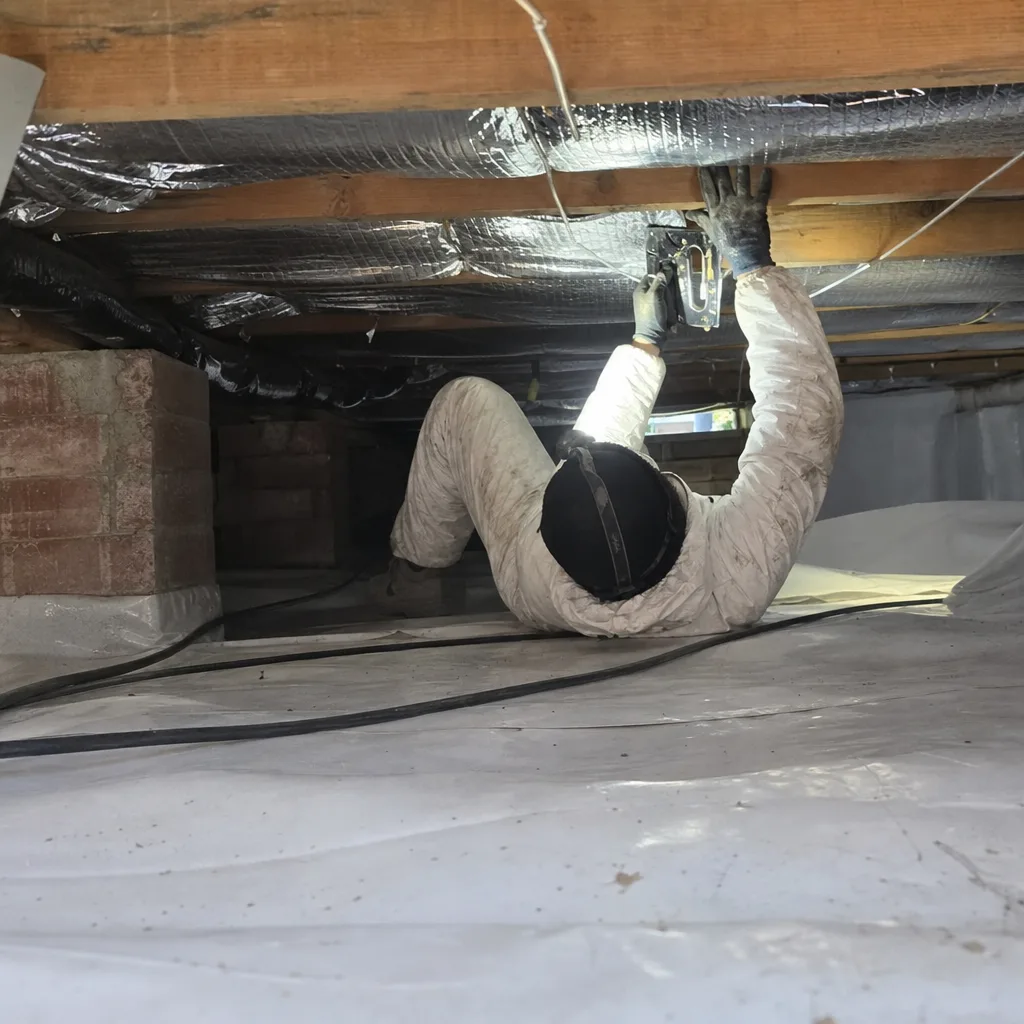
Radiant barrier is a foil-faced material stapled to the underside of roof rafters or laid over existing insulation. It reflects radiant heat rather than absorbing it. In San Jose’s dry, sun-heavy summers, that’s the difference between an attic that sits at 120 degrees and one that sits at 150. When the foil tears, detaches, or gets buried under blown-in insulation, it stops doing its job. The house doesn’t know. The thermostat does.
Here’s what you need to know before you spend a dollar on Owens Corning radiant barrier installation in San Jose.
Key Takeaways
- Installed cost in San Jose: $1,200-$2,800 for a typical single-story attic
- We stock Owens Corning radiant barrier on our trucks, and we’ll install it same-day in most cases
- The Done Right Promise covers our workmanship for life. If it’s not done right, we make it right.
- DIY is possible for simple over-insulation installs, but rafter-stapling in a hot attic is genuinely miserable work and easy to get wrong
Which Owens Corning Models This Applies To
Owens Corning makes two radiant barrier products that matter for San Jose homes. The first is the Owens Corning Attic Radiant Barrier, a single-layer reflective foil laminate, and the second is Foil-Faced Insulation batts, which combine fiberglass insulation with a radiant barrier facing. The pure radiant barrier is what most homeowners mean when they ask about installation: it comes in rolls that are typically 48 inches wide and 25, 50, or 100 feet long.
The compatibility gotcha is that Owens Corning radiant barrier is not a one-size-fits-all product. If your home has an older attic with a low-slope roof or non-standard rafter spacing (anything other than 16 or 24 inches on center), a standard roll will fight you the whole way. The same applies if you’re pairing the barrier with Owens Corning blown-in insulation. Radiant barrier stapled to rafters and radiant barrier laid over loose-fill are completely different installation methods, and one doesn’t substitute for the other. We identify what you have by looking at the attic, not by asking you to read a label that probably has drywall dust on it anyway.
For the record: we’re an independent installer, not an Owens Corning affiliate. We install their radiant barrier because it performs consistently and the foil resists tearing better than the cheaper generic stuff. We also carry Reflectix-brand radiant barrier for smaller scopes like garage doors and water heater covers.
Signs Your Owens Corning Radiant Barrier Installation Is Failing
Radiant barrier doesn’t fail with a bang. It fails quietly and costs you money in small increments.
- Upstairs rooms are consistently warmer than downstairs in summer. The barrier has either detached from the rafters or has been damaged by roof leak moisture. When the foil sags or tears, heat transfer reverts to standard attic behavior and your upstairs picks up the load.
- Visible from the attic hatch: shiny foil has gaps, tears, or is hanging loose. This is common after rodents run through, after roofers walk the attic, or after aging staples rust and let go. The fix is reinstallation of the affected section.
- Insulation has been disturbed and the foil is buried or compressed. This happens after electricians or HVAC techs crawl through. A buried radiant barrier is dead weight. It needs to be pulled back to the surface or reinstalled on rafters.
- Your cooling bill is creeping up with no other explanation. Radiant barrier can cut San Jose cooling loads by 10 to 15 percent when properly installed. When it fails, the change shows up over a full season more than in one bill.
- The attic is clearly hotter than it used to be at midday. If you can’t stand in the attic for more than 60 seconds in July without feeling dizzy, something has gone wrong. A functional radiant barrier in San Jose’s climate should keep the attic noticeably closer to outdoor temperature even at 2 p.m.
Replacement Cost & What’s Included
In San Jose, Owens Corning radiant barrier installation and replacement typically runs $1,200 to $2,800 fully installed. The range reflects roof pitch, attic size, whether we’re stapling to rafters or laying over insulation, and whether old material needs to be torn out first. A simple 1,000-square-foot ranch with easy access lands on the lower end. A steep-pitch, two-story house in Almaden or the Silver Creek area with multiple roof planes lands higher.
Every quote we give is upfront and line-itemed. The number includes the Owens Corning material, removal of failed barrier if needed, installation labor, and all cleanup. What it never includes is a surprise charge on the invoice. If the attic is genuinely hazardous, like tight clearances or exposed knob-and-tube wiring, we’ll tell you before we quote, not after. All work carries the Done Right Promise: if the installation isn’t done right, we come back and make it right for life. That’s Walt Brenner’s guarantee, and we don’t write exceptions into the fine print.
When you call for a quote, ask about our $40 off any repair over $200 and the permanent 10% senior and veteran discount. We also offer a free second opinion on any written estimate, with no trip charge inside our service county.
DIY or Call Us?
Here’s the honest split. Laying radiant barrier over existing attic insulation is a job a handy homeowner can tackle with a utility knife, a straightedge, and knee boards. The material is light, cuts easily, and there are no dangerous components. Rafter-stapling is different. You’re working overhead in a hot, confined space, often near roofing nails, ducting, and wiring. Staple guns slip. Handfuls of fiberglass end up in places you’d rather not mention.
What goes wrong most often with DIY is not that the barrier fails, it’s that the install is incomplete: gaps at the ridge, seams left untaped, foil pushed up tight against roof decking instead of leaving a ventilation channel. These are the mistakes that make an installation pointless. We’ll come out, look at what you’ve got, and quote the job for free. If you’re mid-project and stuck, call (408) 837-7384 and we’ll tell you what it needs. Walt says do it right or do it twice, and we’d rather not see you twice.
FAQs
When properly installed and kept dry, Owens Corning radiant barrier lasts 10 to 20 years in San Jose’s climate. The limiting factors are moisture from roof leaks, rodent activity, and physical damage from tradespeople walking through the attic.
Yes, sections of torn or detached foil can be repaired by cutting out the damaged area and patching with new material and foil tape. The call on repair vs. full replacement depends on how much of the attic is affected. If you’ve got one or two small tears, repair makes sense. If the whole attic shows sagging and gaps, you’ll pay more chasing patches than you would for a clean reinstall. Call (408) 837-7384 and we’ll help you decide.
Most San Jose single-story homes take us 3 to 5 hours for a full attic. Two-story homes and steep-pitch roofs can push into a full day. If you call before 10 a.m., we can often schedule same-week or same-day in our service county.
Yes. We keep Owens Corning radiant barrier rolls on our trucks in the standard widths and lengths, so the material is ready on install day. For larger attics or unusual rafter spacing, we can have the right rolls in hand before the crew shows up.
Call Walt’s Insulation for Owens Corning Radiant Barrier Installation in San Jose
If you’ve got failed radiant barrier or you want it installed right the first time, call (408) 837-7384. A live person answers, 24/7. We’ll schedule a free estimate with no trip charge in our service county, line-item the whole job, and send a background-checked technician in a uniform, not a subcontractor you’ve never met. We’re the one down the road, locally owned and owner-operated since 2000. When you call, you’ll deal with us. That’s the whole point.
Written by Walt Brenner, Owner, Walt’s Insulation at Walt’s Insulation, serving San Jose and nearby areas.