
Demilec Crawl Space Encapsulation: The San Jose Owner’s Guide
If your Demilec crawl space encapsulation system is peeling, sagging, or letting moisture back in, we stock Demilec-compatible vapor barrier material and encapsulation components on our trucks, and we install them throughout San Jose for a typical range of $1,800 to $4,200 depending on crawl space size and how much of the existing system needs replacing. Most San Jose homeowners discover the problem the hard way: a musty smell drifting up through the floor, a spike in the PG&E bill, or standing water under the house after a winter storm. The good news is this is a repair we handle same-week, and often same-day, because we keep the materials on hand rather than special-ordering them.
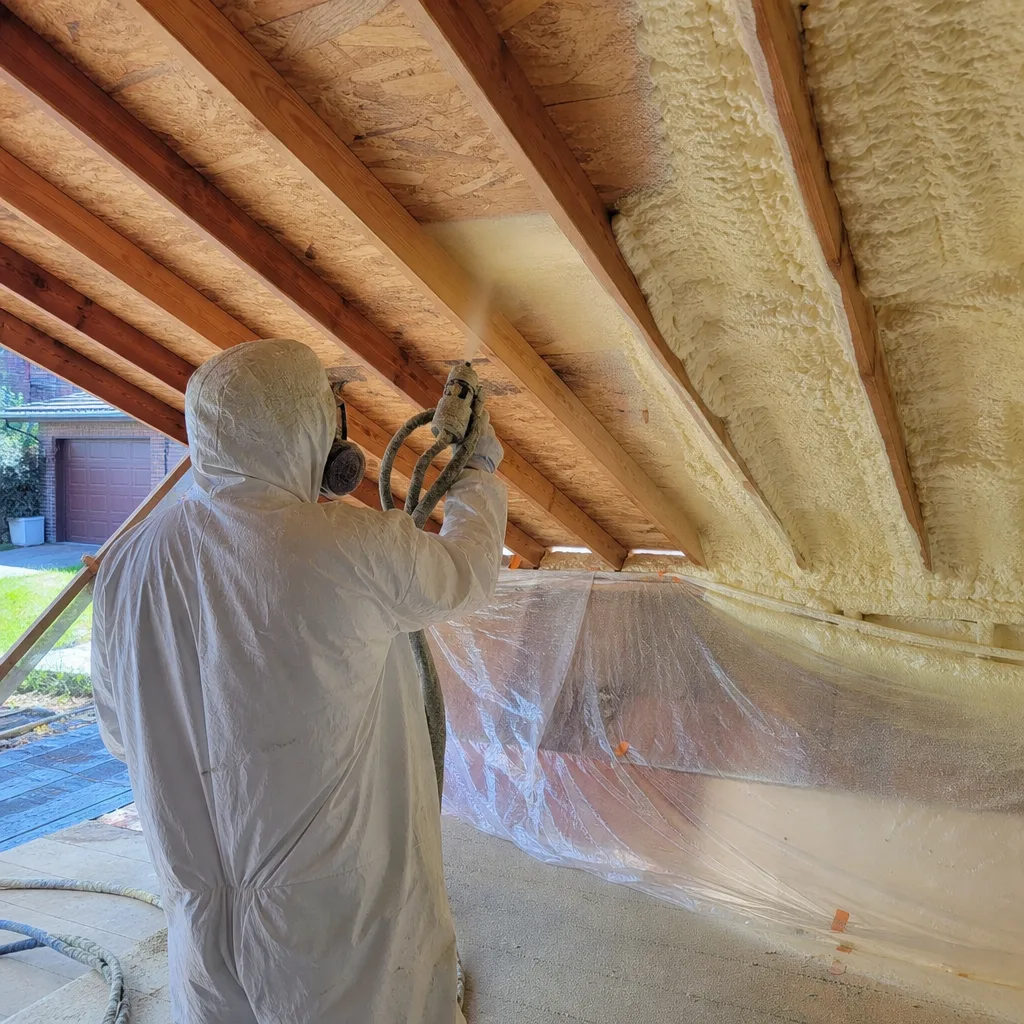
Here’s what twenty-five years of crawling under Bay Area houses has taught us: Demilec products fail in predictable ways, and most of the time the failure isn’t the foam itself. It’s the accessories, the seams, the attachment points, or a drainage issue that was never addressed before the encapsulation went in. That’s what we’ll walk you through below.
Key Takeaways:
- We stock Demilec-compatible crawl space encapsulation materials locally and can usually schedule San Jose repairs within 48 hours.
- Total replacement in San Jose typically runs $1,800 to $4,200, with the crawl space square footage being the biggest cost driver.
- We are an independent installer, not affiliated with Demilec, and we’ll match the right material to your existing system rather than selling you a full tear-out you may not need.
- Every job is backed by our lifetime Done Right Promise. If it’s not done right, we make it right. No runaround.
Which Demilec Models This Applies To
Demilec’s crawl space line most commonly shows up in San Jose homes as Heatlok HFO Pro or Heatlok Soy 200 closed-cell spray foam applied directly to crawl space walls and rim joists, paired with a 10-mil or 12-mil reinforced polyethylene vapor barrier laid across the floor. We also see older Demilec Sealection 500 installations in homes built or retrofitted between roughly 2005 and 2015. If you’re not sure which product you have, look for the manufacturer label, which is usually stapled near the crawl space entrance or sprayed onto the foam itself. The label will show the product name, lot number, and application date. If the label is gone, we can identify the material by density and cell structure once we get under the house.
One compatibility gotcha we run into regularly in San Jose: Demilec open-cell and closed-cell foams look similar once they’ve aged and yellowed. If someone patches an open-cell area with closed-cell foam, or vice versa, moisture gets trapped between the two layers and you end up with exactly the problem the encapsulation was supposed to prevent. We match the new material to the existing product, because mixing them is how you turn a $600 patch job into a $4,000 redo. For aftermarket equivalents, we generally stick with Demilec-spec material rather than generic substitutes when the original system is still structurally sound. The foam chemistry matters for adhesion, and in a Bay Area crawl space with seasonal humidity swings from 40% to 90%, the wrong foam pulls away from the foundation wall within two or three years.
Signs Your Demilec Crawl Space Encapsulation Is Failing
- Musty or earthy smell inside the house, especially on the first floor. This usually means the vapor barrier has torn or pulled away from the foundation wall, letting ground moisture evaporate into the crawl space and rise through the floor assembly. In San Jose’s clay-heavy soil, winter rains make this dramatically worse.
- Peeling or bubbling foam on the crawl space walls. Closed-cell foam that’s been exposed to repeated moisture cycles loses its bond to the foundation, especially in older San Jose homes with unsealed stem wall cracks. Bubbling means water is getting behind the foam; pulling it off and starting fresh is almost always the right call.
- Visible standing water or damp soil under the house after rain. Encapsulation doesn’t stop water, it redirects it. If the original install skipped a sump pump, French drain, or proper grading, water pools on top of the vapor barrier and eventually finds a seam. This is the most common failure we see in Willow Glen, Cambrian, and Rose Garden homes built before 1960.
- Floor cupping, warping, or soft spots above the crawl space. Persistent humidity in the 70%+ range softens subflooring over time. By the time you feel a soft spot, you’ve usually had a failing encapsulation system for three to five years.
- Rising energy bills with no other explanation. Wet insulation under the floor stops insulating. If your crawl space is damp, the R-value of your subfloor insulation drops by half or more, and your HVAC system works harder to keep the living space comfortable in San Jose’s summer heat.
Replacement Cost & What’s Included
For a typical San Jose crawl space between 800 and 1,200 square feet, expect to pay $2,400 to $3,800 for a full Demilec-compatible re-encapsulation. That includes removing failed foam from the walls where needed, re-spraying the perimeter and rim joists, installing a new 12-mil reinforced vapor barrier across the floor with overlapped and taped seams, sealing the barrier to the foundation walls, and replacing any damaged insulation under the subfloor. Smaller jobs, like replacing a torn section of vapor barrier or patching a delaminated wall area, run $600 to $1,500.
What drives the price up in San Jose specifically is access. Older homes in neighborhoods like Naglee Park or Japantown often have crawl spaces under 30 inches of clearance, which means more labor hours on our backs. Ductwork in the way, foundation piers, and old knob-and-tube wiring left behind also add time. We give upfront pricing before we start, and you’ll know the exact number before any work begins. Every Demilec-compatible encapsulation repair we do carries our lifetime Done Right Promise on workmanship. If it’s not done right, we make it right. No callbacks, no phone tag, no “we’ll get to it.”
DIY or Call Us?
You can absolutely inspect your own crawl space, and we encourage it. A flashlight, a mask, and ten minutes will tell you whether your vapor barrier is intact, whether standing water is present, and whether the foam on the walls is still bonded. What we don’t recommend is DIY spray foam application. Closed-cell foam application requires a respirator rated for isocyanates, proper ventilation, and temperature control. Applied incorrectly, the foam off-gasses, doesn’t adhere, and you’re worse off than before. The isocyanate compounds in spray foam are a legitimate respiratory hazard, and it’s the reason our technicians are trained and equipped for the job rather than improvising. If you’ve already got a torn vapor barrier, that’s the one exception: a roll of contractor-grade tape and a patch piece can buy you a few months. But the root cause will still need to be addressed.
If your Demilec system is failing, call (408) 837-7384. We’ll give you a straight answer about whether you need a patch or a full redo, and if it’s the latter, we’ll quote it honestly.
FAQs
A properly installed Demilec closed-cell foam system with a 12-mil vapor barrier typically lasts 15 to 25 years in San Jose’s climate, though the vapor barrier itself often needs patching or replacing at the 10-year mark due to foot traffic from plumbers, electricians, and pest control visits. If your system is failing before year five, the problem is almost always installation-related or drainage-related, not the product. Call (408) 837-7384 and we’ll inspect it for free inside our service county.
Yes, in many cases. Torn vapor barrier sections can be patched or overlapped with new material, and delaminated foam areas can be cut out and re-sprayed. We’ll tell you honestly whether a repair makes sense or whether the failure pattern means a full redo. If you already have a written estimate from another company, bring it in and we’ll give you a free second opinion.
Most San Jose repair jobs take one to two days, depending on crawl space size, existing moisture levels, and whether we need to remove failed foam first. A full tear-out and redo on a large or particularly wet crawl space can run three days. We’ll give you a clear timeline before we schedule.
We stock Demilec-compatible closed-cell foam, 10-mil and 12-mil vapor barrier material, seam tape, and fastening hardware on our trucks and in our local warehouse, so most San Jose jobs start within 48 hours of your call. We also stock Reflectix radiant barrier and vapor barrier products if your project calls for a different approach. Call (408) 837-7384 to check availability for your specific setup.
Walt’s Insulation is an independent service provider and not affiliated with Demilec. If your Demilec crawl space encapsulation is failing, you don’t need to live with the smell, the damp, or the energy bill that keeps climbing. Call (408) 837-7384 for a free estimate. Walt Brenner still answers the phone, and he’ll tell you what’s actually going on under your house. We’re the one down the road, and we plan on being here for the next twenty-five years.
Written by Walt Brenner, Owner, Walt’s Insulation at Walt’s Insulation, serving San Jose and nearby areas.