
Demilec Vapor Barrier Installation: The San Jose Owner’s Guide
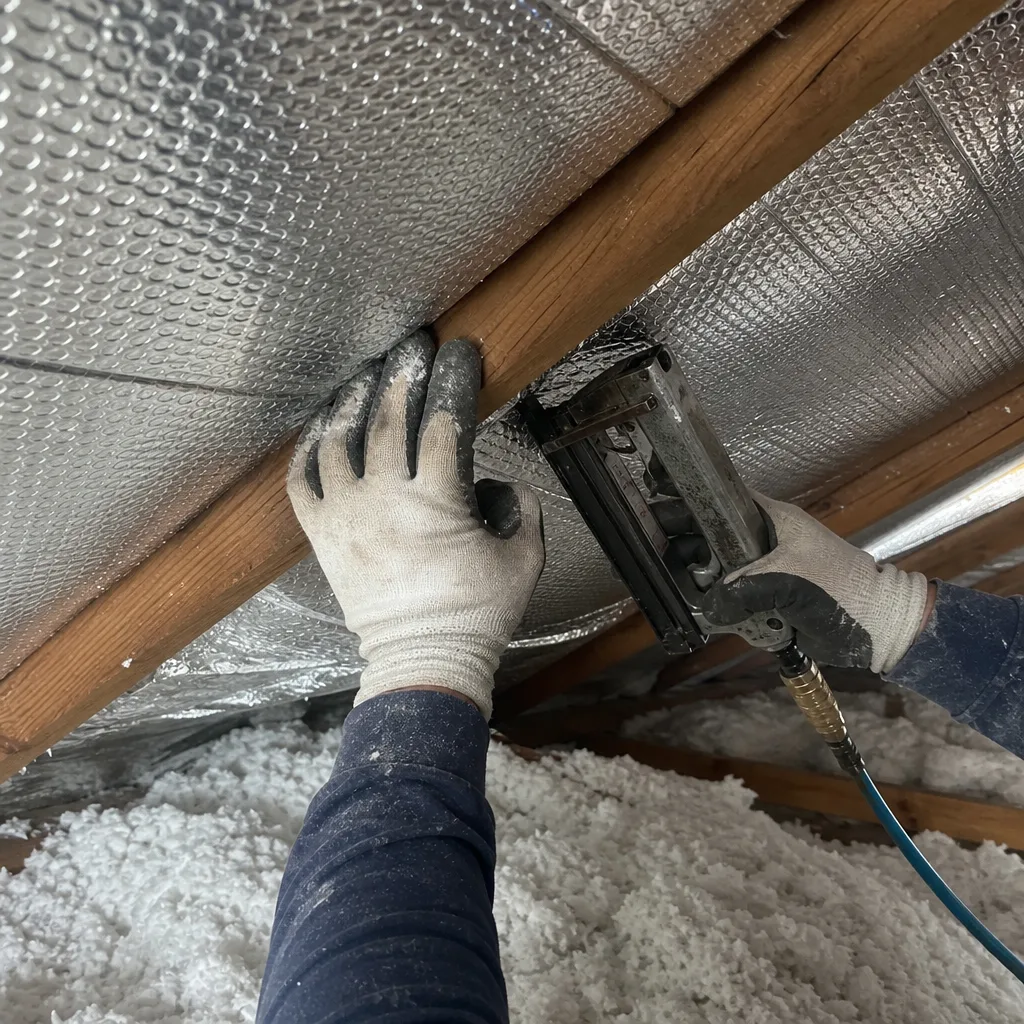
Demilec vapor barrier installation in San Jose typically runs $1,800 to $4,200 for a standard crawl space, and we stock Demilec-compatible barrier material on our trucks so most jobs are done same day. Most homeowners discover the failure the hard way: a musty smell drifting up through the floorboards, condensation on ductwork, or a floor that feels cold in January when it shouldn’t. You’ll usually find the problem in the crawl space itself, where the original barrier has torn, pulled away from the foundation piers, or degraded into brittle shreds after years of ground moisture contact.
Which Demilec Models This Applies To
Demilec makes a full line of spray foam systems, and the vapor barrier work we do pairs with their closed-cell foams like Heatlok HFO and Sealection 500, as well as their open-cell Agribalance products. Here’s the compatibility gotcha most San Jose homeowners don’t know: a vapor barrier only earns its keep when it works with the foam above it, not against it. If your crawl space has open-cell Demilec foam, that foam breathes, which means the ground barrier needs to handle more moisture transfer than it would under closed-cell foam. We measure and match barrier thickness accordingly, usually 10-mil to 20-mil reinforced polyethylene depending on what’s above it.
On the OEM-versus-aftermarket question: Demilec’s own accessory line is solid, but for ground barriers specifically, we’ve found that certain American-made 20-mil poly barriers actually outperform the OEM spec at a lower cost. We’re an independent installer, not a Demilec dealer, so we stock what holds up, not whatever has the right logo on the box.
Signs Your Demilec Vapor Barrier Installation Is Failing
- Musty or earthy smell in the living space. When the barrier tears or separates at the seams, ground moisture moves up into the floor assembly. That damp smell is the first signal, and it usually shows up in rooms over the crawl space before anywhere else.
- Condensation on crawl space ductwork or floor joists. In San Jose’s cool mornings, a failed barrier lets humid air rise and bead on cold metal ducts. That water drips, rusts the ducts, and feeds mold on the subfloor above.
- Insulation falling from between floor joists. Once moisture soaks fiberglass batts, they get heavy and sag. We’ve pulled batts out of Willow Glen crawl spaces that were holding three times their own weight in water.
- Barrier visibly torn, curled at the edges, or pulled away from piers. Walk the crawl space perimeter with a flashlight. If the barrier isn’t lapped up the foundation wall at least 6 inches and sealed, it’s not doing its job.
- An uptick in allergy symptoms or a persistent damp feeling. Open crawl space moisture feeds dust mites and mold spores that cycle up through floor penetrations. You can’t always see it, but your sinuses will tell you.
Replacement Cost & What’s Included
For a standard San Jose crawl space, installed Demilec-compatible vapor barrier replacement runs between $1,800 and $4,200. Smaller bungalow crawl spaces in neighborhoods like Rose Garden or Japantown land at the lower end. Homes with complex pier layouts, low clearance, or significant barrier-to-foam integration work land higher.
Every quote includes removal and disposal of the old barrier, new 10-mil to 20-mil reinforced poly matched to your Demilec foam type, seam taping, mechanical fastening to piers, lapping up the foundation wall, and cleanup. We give you the price before we start, and the work is covered by our lifetime Done Right Promise. Do it right or do it twice, and we’d rather not see you twice.
Standing offer: $40 off any repair over $200, no trip charge inside the county, and 10% off for seniors and veterans, always.
DIY or Call Us?
Vapor barrier replacement isn’t dangerous in the way a garage door spring is, but it’s grimy work in tight quarters, and the failure points are rarely where a first-timer looks. You can check the condition of your barrier with a good flashlight and a little humility: look for tears, gaps at seams, and whether the barrier really rides up the foundation wall. What we see go wrong with DIY attempts is the detailing: seams that aren’t sealed, piers that get wrapped sloppily and tear within a year, or the wrong mil thickness for the foam system above.
If you’re under the house with a roll of poly and a staple gun, you’ve already lost the morning and probably won’t match what a crew can do in three hours. Call us at (408) 837-7384 for a straight answer on what you need.
FAQs
A properly installed 10-mil to 20-mil barrier should last 15 to 25 years in San Jose’s climate, but the real variable is installation quality: a poorly detailed barrier will fail at the seams within three to five years. Call (408) 837-7384 and we’ll tell you honestly whether yours is worth saving or needs a full replacement.
Small tears can be patched with seam tape and a matching poly patch, but if the barrier is brittle, curling at the edges, or pulling away from multiple piers, patchwork is throwing good money after bad. We’ll give you a free second opinion on any written estimate you’ve got.
Most standard crawl spaces are done in a single day, including removal of the old barrier and cleanup, and we stock the material on the truck so there’s no wait on parts.
We stock 10-mil and 20-mil reinforced poly barrier material on our trucks, along with seam tape, fasteners, and everything else the job needs, so most San Jose jobs are same-day. We also keep Reflectix on hand for crawl space wall applications when the job calls for it.
Written by Walt Brenner, Owner, Walt’s Insulation at Walt’s Insulation, serving San Jose and nearby areas.