
Icynene Attic Insulation: The San Jose Owner’s Guide
If your Icynene attic insulation has failed or you’re seeing signs it’s on the way out, we stock Icynene-compatible open-cell and closed-cell foam products and can typically get a crew to your San Jose home within 24 to 48 hours. Installed replacement costs for a standard San Jose attic (1,200 to 2,000 square feet) run between $1,800 and $5,400 depending on foam type, depth needed, and whether old material has to come out first. Most homeowners discover the problem the same way: a spike in their summer cooling bill, a hot upstairs that never used to be hot, or visible shrinkage around the roofline where the foam has pulled away from the framing.
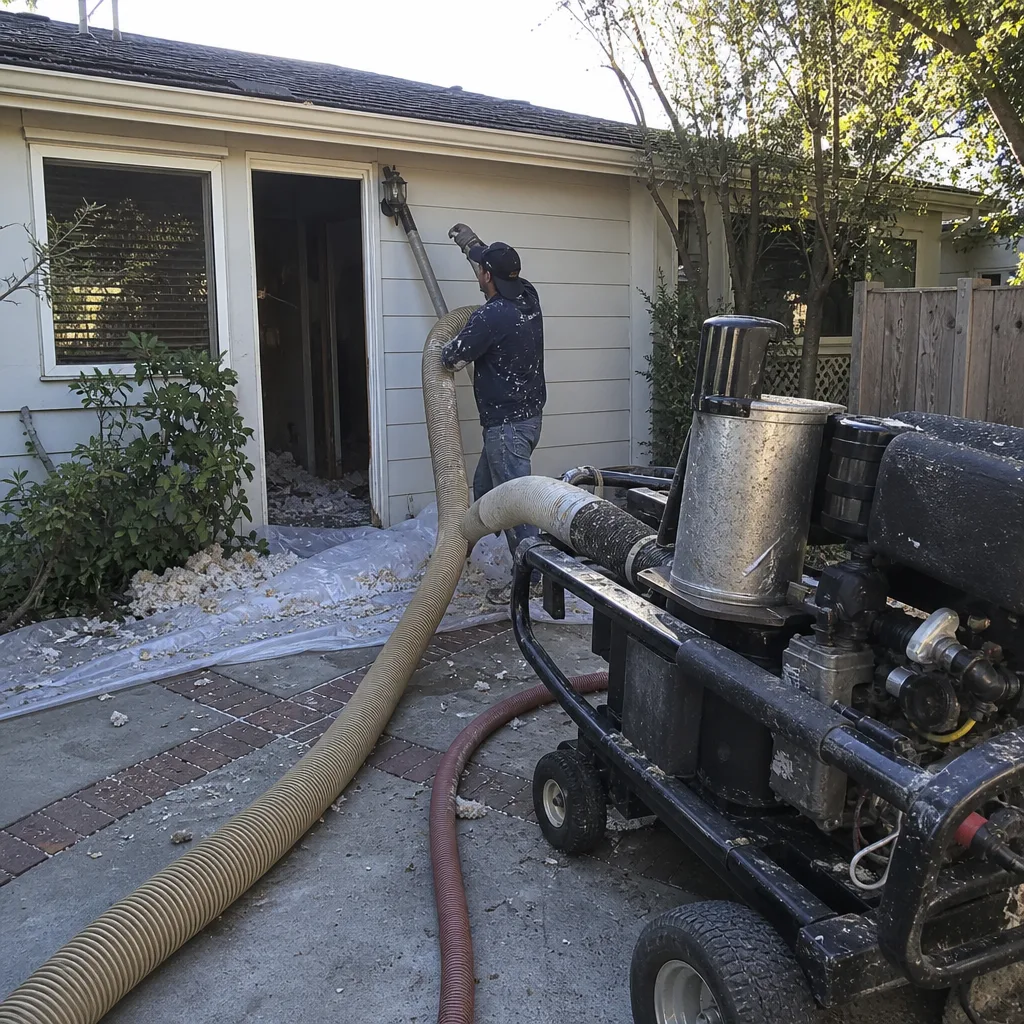
We’ve been installing and replacing Icynene in San Jose attics since 2000, and we’re an independent contractor, not a factory rep or an Icynene corporate outlet. That matters because we don’t have to sell you on a particular foam line. We just have to sell you on what actually fixes your attic. Walt Brenner’s been running jobs in this valley long enough to know that a San Jose attic in August isn’t testing your patience, it’s testing whether your insulation was installed right in the first place.
Which Icynene Models This Applies To
Icynene’s attic products fall into two camps: open-cell light-density foam (typically Icynene Classic and Icynene Classic Plus) and closed-cell medium-density foam (Icynene ProSeal and ProSeal LE). The open-cell lines are the ones we most often see failing in San Jose attics, because they’re vapor-permeable and they move with the framing. Over 15 to 20 years, that movement plus the temperature swings between our cool wet winters and 100-degree summer attic conditions causes the foam to shrink back from rafters, leaving air channels exactly where you don’t want them.
The compatibility gotcha most people don’t know: you can’t just spray closed-cell over failed open-cell and call it a day. Open-cell foam needs to breathe. Trapping it under a closed-cell cap creates a moisture sandwich that rots San Jose roof decking from the inside out. If you have open-cell Icynene that’s failed, the right fix is usually full removal or a careful hybrid approach with moisture analysis first. On the replacement side, we work with OEM Icynene product as well as equivalent open-cell and closed-cell foams from Demilec and CertainTeed when the job calls for it. If your attic has an older Icynene formulation from the 2000s, bring us a photo of the foam color and texture. The old stuff looks noticeably different from current product, and it tells us what we’re dealing with before we even climb the ladder.
Signs Your Icynene Attic Insulation Is Failing
- Hot upstairs rooms that used to stay comfortable. Open-cell Icynene loses R-value when it shrinks away from rafters. Even a half-inch gap creates a thermal bypass that makes your upstairs feel like it’s baking by 3 p.m. We see this most often in Willow Glen and Almaden Valley homes built in the 2005 to 2015 wave when Icynene installs were everywhere in San Jose.
- Visible dark streaks or staining on the foam surface. That’s dust filtration, not just discoloration. Air is moving through or around the foam and leaving behind dirt particles. Where you see streaking, you have an air leak, and the insulation is no longer doing its job.
- Mold or mildew smell in the attic after rain. This one matters in San Jose because our winter rains in the East Foothills and Evergreen area can push moisture into attics through small roof leaks. Open-cell Icynene absorbs and holds water. If you smell mustiness, call us before the roof decking turns into a biology experiment.
- Ice dams or heavy condensation on the underside of the roof deck in winter. Failed foam lets warm air from the house reach the cold roof surface. We don’t get Iowa winters, but we do get cold enough nights in the Santa Teresa foothills for this to matter.
- Spray foam pulling away from the roof deck around vents, skylights, and can lights. Penetration points are always where foam fails first. Walk into your attic with a flashlight and look at the foam around every penetration. If you can see daylight or feel air moving, the seal is gone.
Replacement Cost & What’s Included
Here’s what Icynene attic insulation replacement actually costs in San Jose right now, installed, with old material removal when needed:
| Scope | Typical Price Range | When It Applies |
|---|---|---|
| Spot repair: reseal failed foam around penetrations (under 50 linear feet) | $450-$900 | Small failures caught early |
| Partial re-spray: one attic slope or gable end | $1,200-$2,800 | Localized shrinkage or water damage |
| Full removal and re-spray: open-cell Icynene, 1,200-2,000 sq ft attic | $2,400-$5,400 | Widespread shrinkage, moisture damage, or failed original install |
| Air sealing plus insulation replacement (recommended) | Add $600-$1,200 | When attic bypasses are present under the insulation |
Every price above includes labor, materials, cleanup, and a lifetime workmanship guarantee under our Done Right Promise. If it’s not done right, we make it right, no runaround and no invoice. The range between low and high end comes down to attic access (walk-up stairs versus a pull-down ladder in a tight hallway), how much old foam has to be removed, and the R-value you’re targeting. A crawl-space-grade attic with 24 inches of clearance costs more to work in than a full-standing attic. That’s just honest math.
We also keep Reflectix radiant barrier in stock for San Jose homeowners who want to pair a foam replacement with a reflective layer under the roof deck, which cuts summer attic temperatures by a real margin in our climate.
DIY or Call Us?
Here’s the straight answer: you can safely inspect your own attic. A flashlight, a dust mask, and ten minutes are all it takes to spot foam pulling away from rafters, visible gaps at penetration points, or water staining. What you should not do is try to re-spray Icynene yourself. Spray foam is a two-part chemical reaction that off-gasses during application, requires proper respirator equipment, and will permanently bond to your skin, your clothes, and unfortunately your attic framing in ways you won’t enjoy fixing. Do it right or do it twice, and we’d rather not see you twice.
What you can do today: call us at (408) 837-7384, describe what you’re seeing, and we’ll tell you over the phone whether it sounds like a spot repair or a full re-spray. We don’t charge a trip fee inside our service county, and we’ll give you an honest written estimate before any work starts.
FAQs
Properly installed Icynene open-cell foam lasts 20 to 30 years in a San Jose attic. Poorly installed foam, or foam exposed to repeated moisture cycles, can fail in as little as 10 to 15 years. The difference comes down to installation quality and whether the original contractor sealed the attic properly before spraying. Call (408) 837-7384 if you’re unsure whether yours is failing; we’ll give you a straight read.
Yes, if the failure is localized, which is why we look for shrinkage around penetrations, gable ends, and roofline transitions first. Widespread shrinkage or water-damaged foam usually requires removal and re-spray. The fastest way to know is a 15-minute attic inspection. Estimates are free.
Most San Jose attic replacements take one full day. Full removal plus re-spray in a large or difficult-access attic can run two days. We’ll tell you the real timeline when we see the space, not a generic answer over the phone before we’ve looked.
We keep open-cell and closed-cell Icynene-compatible foam, plus Reflectix radiant barrier, on our service trucks and in our San Jose warehouse. For most spot repairs we can start the same day or next morning with no special-order wait. Call (408) 837-7384 and we’ll tell you what’s on the truck today.
Written by Walt Brenner, Owner, Walt’s Insulation at Walt’s Insulation, serving San Jose and nearby areas.