
Icynene Radiant Barrier Installation: The San Jose Owner’s Guide
Icynene radiant barrier installation in San Jose typically runs $1.50 to $3.00 per square foot installed, and we stock the materials on our trucks for same-day or next-day work in most cases. Owners usually call us after they’ve crawled up for a seasonal check and found the foil facing sagging, torn, or pulling away from the rafters. The good news is this is a straightforward fix when the right product goes up the right way, and you’re not guessing at what failed.
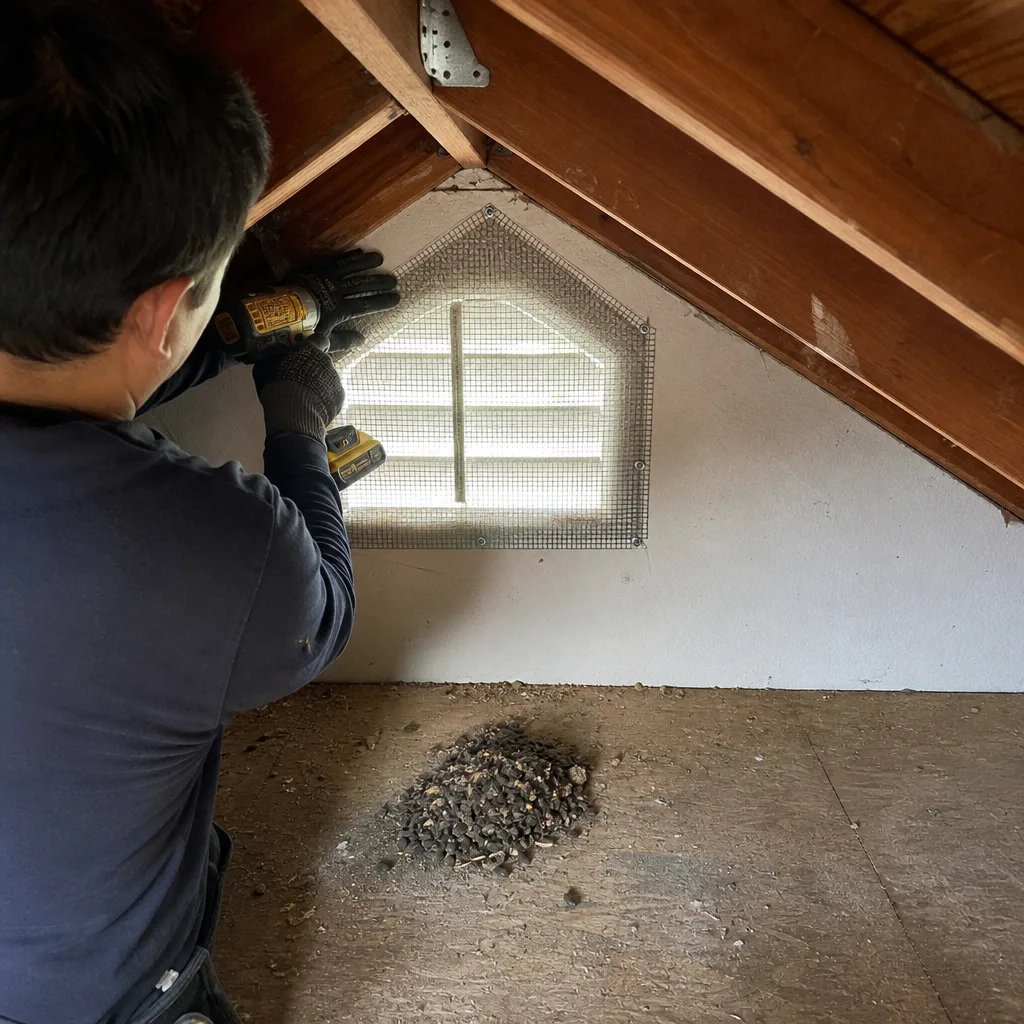
What we see most often in San Jose attics is radiant barrier that was stapled too tight in the first place. The foil needs a slight drape between attachment points to create the air gap that actually reflects heat. When it’s pulled flat or over-stapled, it loses most of its performance and starts tearing at the staple lines. If that sounds familiar, you’re in the right spot.
Which Icynene Models This Applies To
Icynene’s radiant barrier products come in two primary configurations: single-sided foil and double-sided foil, with the double-sided version being the one we install most often in San Jose attics because it handles both summer heat gain and winter heat loss. The material is a perforated, reinforced aluminum foil bonded to a polymer core, and the perforations matter more than most people realize. Perforated barrier lets moisture pass through so you don’t trap condensation against the roof deck. Non-perforated in the wrong application creates a moisture sandwich that leads to mold.
If you’re matching an existing Icynene radiant barrier section, check the edge printing first. Icynene stamps their roll with the product code and perforation spec. If the printing has worn off, measure the foil thickness with a micrometer. Most Icynene radiant barrier runs 0.00025 to 0.0005 inches of aluminum. The thicker end of that range is what you want for long-term durability. We also stock Reflectix as a quality equivalent when an owner wants a direct match in spec without paying a markup for a brand stamp. Both do the job; the installation quality matters more than the roll name.
Key takeaways:
- Perforated Icynene radiant barrier is the right call for vented San Jose attics
- Double-sided foil outperforms single-sided for our climate’s hot summers and cool evenings
- Edge printing or micrometer measurement tells you exactly what you’re replacing
- Walt’s Insulation is an independent installer, not affiliated with Icynene - we stock and install their products and equivalents
Signs Your Icynene Radiant Barrier Installation Is Failing
- Sagging between rafters: The foil has stretched or the staples have worked loose. Once there’s no consistent air gap, the reflective surface can’t do its job. Your attic starts feeling like an oven by mid-afternoon.
- Visible tears along staple lines: This is the classic over-tension failure. Someone pulled the barrier tight instead of leaving a slight drape. Every summer heat cycle makes those tears run further.
- Higher cooling bills compared to last year: A radiant barrier in good shape can lower attic temperatures by 20 to 30 degrees in San Jose’s July heat. When that barrier fails, your AC picks up the slack and your bill shows it.
- Dust or dark streaks on the foil face: Dust films over the reflective surface until it stops reflecting. Dark streaks often mean moisture is running down the barrier, which can point to a ventilation issue you’ll want addressed at the same time.
- Flapping sounds on windy days: If the barrier has separated from enough staples, air movement in the attic makes it audible from below. That’s a sign it’s about to pull down completely.
Replacement Cost & What’s Included
For a typical San Jose home with a 1,500 to 2,000 square foot attic, expect to pay between $2,250 and $6,000 for full Icynene radiant barrier replacement, material and labor included. The range comes down to attic geometry: a simple gable roof with open rafters sits at the low end, while a hip roof with lots of valleys, bracing, and tight corners runs higher because the installer spends more time cutting and fitting.
| Scope | Typical Range (Installed) |
|---|---|
| Partial repair, single section up to 300 sq ft | $450 - $900 |
| Full attic, simple gable roof, 1,500 sq ft | $2,250 - $3,500 |
| Full attic, complex hip roof, 2,000 sq ft | $4,000 - $6,000 |
| Add-on: remove failed barrier and haul away | $300 - $600 |
Every quote we write is itemized so you see the material cost, the labor, and the disposal. No vague line items. And because we back all of our work with the Done Right Promise, if the installation fails due to our workmanship, we fix it at our cost, for as long as you own the home. You also get $40 off any repair over $200, and seniors and veterans always receive 10% off.
DIY or Call Us?
You can safely do the inspection yourself: grab a flashlight, check for tears, sagging, and staple pull-out. You can even measure the affected area so you have a square footage number ready when you call. That saves time on the quote. What we’d caution against is doing the actual install yourself in a hot San Jose attic. Radiant barrier work means working overhead for hours in temperatures that routinely exceed 130 degrees up there in summer. People get heat exhaustion fast, and a fall through the ceiling joists lands you in a drywall repair at minimum, a hospital stay at worst.
When we do it, you get two background-checked, uniformed techs who do this every week, not every ten years. If you want to talk through what you found up there, call (408) 837-7384. A live person picks up, day or night, and we’ll tell you straight whether it’s a repair or a replacement.
FAQs
A properly installed Icynene radiant barrier lasts 15 to 25 years in the San Jose climate, with the main failure points being staple pull-out and physical damage from roof work or rodent activity. The foil itself doesn’t rot, but the attachment method can fail much sooner if the barrier was over-tensioned during install. Call us at (408) 837-7384 and we’ll tell you whether yours is worth patching or needs replacing.
Yes, if the failure is localized. A single torn section between two rafters can be patched or re-secured for a few hundred dollars. If tears run across multiple bays or the foil has dust-filmed to the point of losing reflectivity, replacement is the honest recommendation. We’ll give you the straight answer after looking at it, and the second opinion is free.
Most San Jose homes take one full day for two techs. Complex hip roofs or homes where the old barrier needs full removal first can stretch to day and a half. We schedule in a window, show up when we say, and finish the job before we leave.
Yes. Our techs carry perforated double-sided radiant barrier, including Icynene and Reflectix equivalents, on every truck. If your repair falls within our normal scope, we can complete it the same visit. For full-home replacements, we confirm the material spec before the install day so there are no surprises.
Written by Walt Brenner, Owner, Walt’s Insulation at Walt’s Insulation, serving San Jose and nearby areas.