
Knauf Attic Air Sealing: The San Jose Owner’s Guide
If you’ve got a Knauf attic air sealing product that’s failing or you need the right sealing material matched to your existing Knauf insulation, we stock it and install it, typically for $1.50 to $3.50 per square foot in San Jose depending on attic access, existing conditions, and how much of the sealing layer needs replacing. Most jobs are done same-day when you call before noon. The way homeowners usually discover theirs has failed: a room that won’t hold temperature, a noticeable draft near the attic hatch, or an energy bill that climbs in July and doesn’t come back down in December.
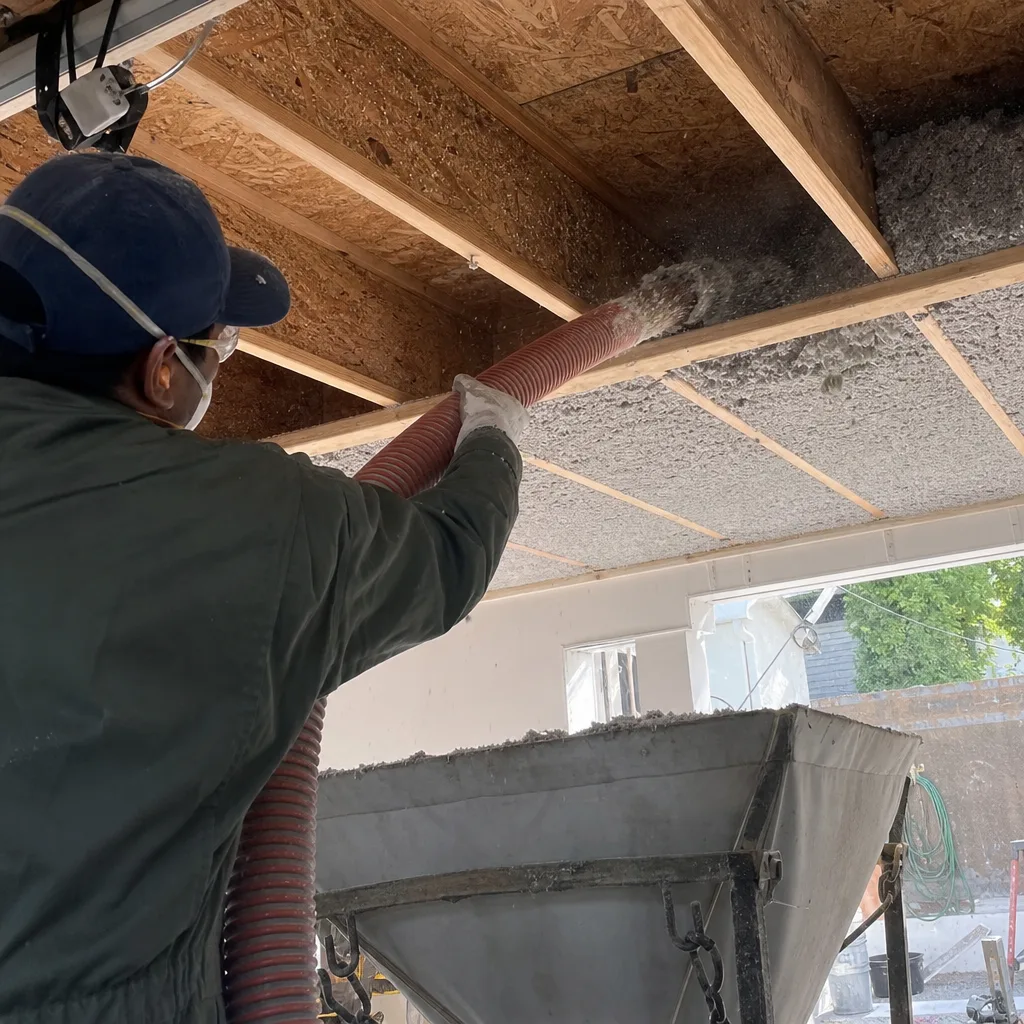
Here’s the thing about attic air sealing in San Jose specifically. Our climate swings from 40-degree winter nights to 100-degree summer afternoons, and that thermal cycling is exactly what breaks down sealing materials over time. Add in the fact that many San Jose homes were built before 1990 with air sealing that was minimal at best, and you’ve got a recipe for leaks around plumbing penetrations, recessed lights, and the attic access hatch. Walt Brenner has been pulling failed sealing material out of attics across Willow Glen, Almaden, and Berryessa since 2000, and the story is almost always the same: it wasn’t installed to fail-safe standards, and now it’s costing real money every month.
Key Takeaways
- Knauf-compatible attic air sealing installed in San Jose typically runs $1.50-$3.50/sq ft
- We stock Knauf-compatible sealing on our trucks for same-day service
- Failed attic air sealing is the silent driver behind high summer cooling bills in San Jose
- Lifetime workmanship on every sealing job, backed by the Done Right Promise
- Free estimate: call (408) 837-7384 and a live person answers, any time
Which Knauf Models This Applies To
Knauf attic air sealing isn’t a single product, it’s a system that pairs with Knauf blown-in fiberglass, Knauf Insulation Batts (like the R-30 and R-38 lines), or Knauf’s spray-applied sealants depending on how your attic was originally set up. The sealing layer we’re talking about is the material that fills the gaps around the top plates, chase penetrations, can lights, and the attic hatch frame, the places where conditioned air escapes into an unconditioned attic. If you have Knauf batt insulation with the paper facing, the sealing often lives at the facing edges and around the perimeter framing.
Here’s the compatibility gotcha most homeowners don’t know: Knauf’s air sealing products are spec-matched to their insulation systems, which means a generic off-the-shelf foam or caulk from the big-box store often won’t expand to the same rate or maintain adhesion to Knauf’s batt facing. It’ll look sealed for a year or two, then separate. That’s why we match the sealing to the existing Knauf product rather than throwing whatever tube of caulk is on sale at the problem. If you’re not sure what Knauf product is in your attic, a photo of the batt facing or the bag label is usually enough for us to identify it over the phone.
OEM Knauf sealing is what we prefer when the attic is already a Knauf system, but there are quality aftermarket options that perform just as well for less money in specific situations. We’ll tell you which one makes sense for your attic and why. As an independent San Jose installer, we’re not affiliated with Knauf directly, we just install and service their products more than just about anyone in the South Bay.
Signs Your Knauf Attic Air Sealing Is Failing
- Rooms directly under the attic run 5-8 degrees off from the rest of the house. This is the classic first sign; the sealing layer has separated around a penetration or along a top plate, and conditioned air is streaming into the attic instead of staying in your living space.
- You can feel a draft near the attic hatch or pull-down stairs. Hatch perimeters are the most commonly failed seal point in San Jose homes, especially on older hinged hatches that lack any weatherstripping or still have the original 1970s gasket material.
- Your summer cooling bill in San Jose jumped year-over-year without a change in usage. When attic air sealing fails, your AC has to work against air that’s moving through the ceiling plane. In San Jose’s July and August heat, that’s often a 10-18% penalty on the cooling portion of your bill.
- Dust or insulation particles keep appearing on the top shelf of closets or in upper rooms. Failed sealing creates pathways for loose-fill Knauf fiberglass to migrate into the living space through gaps around light fixtures and ceiling penetrations.
- You’re finding rodent droppings or nesting material in the attic. A failing sealing layer is also a pest entry point. Rodents and insects get in through the same gaps your conditioned air is getting out through.
Replacement Cost & What’s Included
For a standard San Jose home with an accessible attic, Knauf-compatible air sealing replacement runs $1.50 to $3.50 per square foot of attic floor area, installed. That includes the sealing material, removal of the failed product in the affected areas, labor, and our lifetime workmanship under the Done Right Promise. If your attic is tight-access, has a low-pitch roof, or the existing sealing failed because of pest damage that needs remediation first, those factors push the price toward the higher end of that range.
Here’s what you should know about pricing transparency: we don’t charge by the linear foot with hidden surcharges, and we don’t do the “measurement fee” dance. You get an upfront number before work starts. Parts and labor are itemized, so you know exactly what the Knauf sealing material costs and what the install costs. If you already have a written estimate from another San Jose contractor, bring it to us. We’ll give you a free second opinion and if you choose us, we honor the better path with our standard pricing.
What’s included in every air sealing job:
- Inspection of all penetrations, top plates, hatches, and can light housings
- Removal of failed sealing material in affected areas
- Knauf-compatible sealing around all identified leak points
- Verification of the attic-to-home air barrier
- Lifetime workmanship under the Done Right Promise
DIY or Call Us?
Some parts of this you can check on your own, and we encourage it. Pop your head into the attic with a flashlight and look at the hatch perimeter, the areas around plumbing vent pipes, and the junction boxes for any ceiling fixtures. If you see gaps, cracked caulk, or daylight sneaking through around a vent stack, that’s the smoking gun. You can also walk the house on a hot San Jose afternoon and hold your hand near the attic hatch; if you feel air moving, the seal has failed.
What we don’t recommend is crawling deep into a tight attic to re-seal top plates and can light housings yourself. Attic work in San Jose’s warmer months gets hot fast in confined spaces, and if you’re working near existing wiring or around recessed light housings, there’s a real safety consideration. Every can light of a certain era isn’t rated for contact with sealing material, and sealing the wrong light the wrong way is a fire hazard. We know which housings are IC-rated and which need clearance maintained. Train your eyes on the problem, call us for the fix. The number is (408) 837-7384 and the estimate is free.
FAQs
Properly installed Knauf-compatible attic air sealing in San Jose typically lasts 15 to 25 years before it needs meaningful attention. The lifespan depends on attic temperature swings; San Jose attics can exceed 140°F in summer, which accelerates material breakdown. The reason most sealing fails early isn’t the product, it’s the installation. Call (408) 837-7384 and we’ll inspect yours for free.
Failed attic air sealing can usually be repaired in targeted areas, and most San Jose homes we see only need partial re-sealing around 5 to 12 problem points rather than a full replacement. Full replacement only makes sense when the sealing layer has failed broadly or was never properly installed in the first place. The right answer depends on what we find when we see the attic.
A standard Knauf attic air sealing replacement in a typical San Jose home takes 3 to 5 hours from setup to cleanup, and most jobs are done same-day when scheduled before noon. Larger homes or attics with extensive pest damage or limited access may take a full day. Call us for a precise timeline: (408) 837-7384.
Yes, we stock Knauf-compatible sealing material on our trucks for same-day San Jose service, along with the most common Knauf batt and blown-in product lines. We also keep Reflectix on hand for radiant barrier work when it applies. If your attic needs something unusual, we can usually have it by the next business day.
Written by Walt Brenner, Owner, Walt’s Insulation at Walt’s Insulation, serving San Jose and nearby areas.