
Owens Corning Crawl Space Encapsulation: The San Jose Owner’s Guide
We stock and install Owens Corning-compatible crawl space encapsulation systems throughout San Jose, with most full encapsulations running between $4,800 and $12,500 installed depending on square footage, access, and what’s already down there. We keep vapor barrier, seam tape, fasteners, and drainage matting on our trucks, so we can usually start same week, not same month. Most San Jose homeowners call us after noticing standing water under the house, a musty smell drifting up through the floor, or insulation that’s gone soggy and started sagging away from the joists.
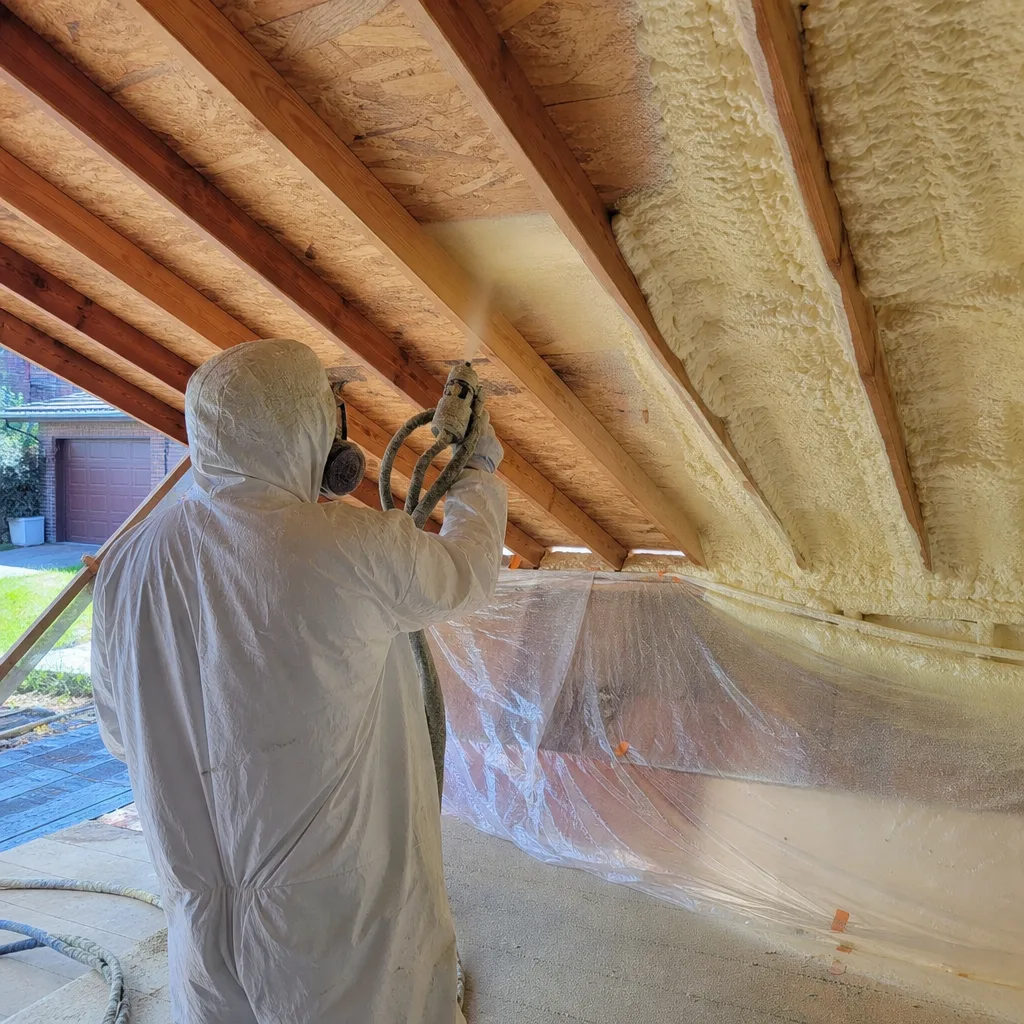
Here’s the thing about crawl space encapsulation in San Jose specifically: our clay-heavy soil holds moisture for months after the winter rains, and that moisture doesn’t just sit there. It moves up through the ground into your crawl space, hits the cooler air under the house, and condenses. Once that cycle starts, fiberglass insulation under the floor acts like a sponge, the rim joists start sweating, and mold has everything it needs. If you’ve got Owens Corning materials down there and they’re failing, it’s usually because the original install skipped a step: no drainage layer, no seam sealing, or vapor barrier that was too thin for our soil conditions. We’ll get into what that looks like below.
Which Owens Corning Models This Applies To
Owens Corning’s crawl space line runs through several product families, but in San Jose we mostly see two in existing homes: the standard Owens Corning Crawlspace Vapor Barrier (6-mil or 10-mil polyethylene) and what many contractors call the “encapsulation kit” approach using Owens Corning FOAMULAR or InsulPink rigid foam board along the foundation walls paired with their vapor barrier on the floor. If you’re not sure what you have, check the face of the vapor barrier for the printed Owens Corning name and mil thickness. On foam board, look for the pink or green stamp: FOAMULAR 250 or InsulPink are the common ones, and the thickness matters. Foundation walls in San Jose homes built before 1990 are rarely flat or clean enough for the thin 1-inch board to last without cracking, which is why we recommend 1.5-inch minimum or a reinforced barrier.
On the OEM-versus-aftermarket question: Owens Corning doesn’t sell a true “repair part” for failed encapsulation. You’re either patching with compatible 10-mil or 12-mil polyethylene and Owens Corning-brand seam tape, or you’re replacing sections outright. We carry both OEM Owens Corning seam tape and a heavy-duty aftermarket tape rated for polyethylene-to-polyethylene and polyethylene-to-concrete bonding, because the OEM tape alone doesn’t hold up in San Jose’s alkaline soil contact zones. The one brand we also stock for reinforcement projects is Reflectix, mostly for rim joist insulation when we’re already in there. If your home’s original encapsulation used Owens Corning InsulPink, the replacement decision comes down to whether the foam is load-bearing or just thermal: if it’s load-bearing, we spec the same R-value or better, never thinner. That’s a gotcha we’ve seen more than once after a cheap redo.
Signs Your Owens Corning Crawl Space Encapsulation Is Failing
- Standing water or damp soil after a dry week. San Jose’s dry summer should let the crawl space dry out on its own. If it’s still wet in August, the vapor barrier has been compromised, or no drainage layer was ever installed beneath it. The water isn’t going anywhere.
- Musty smell inside the house that gets worse when the AC runs. Air from the crawl space gets pulled into the living space through floor penetrations and rim joist gaps. That smell means mold is already active on the fiberglass or the underside of the subfloor.
- Sagging or fallen fiberglass batts under the floor. When Owens Corning fiberglass insulation absorbs moisture, it loses its loft and falls. We’ve pulled down batts in Willow Glen and Almaden homes that weighed three times what they should have, completely soaked.
- Visible tears, gaps, or pulled-away seams in the vapor barrier. Rodents, plumbing work, and old age all tear 6-mil polyethylene. Once there’s a gap, moisture gets through and spreads across the soil under the barrier, slowly turning the whole thing into a greenhouse floor.
- Condensation on ductwork or plumbing pipes in the crawl space. If you see beads of water on the ducts or copper lines under the house in the summer, the relative humidity down there is too high. That’s exactly what an intact encapsulation system should prevent.
We’ve also seen encapsulation fail from the top down. If the rim joists were never insulated and sealed with foam board or spray foam, warm San Jose air hits the cool rim in summer and condenses. No vapor barrier on the floor fixes that. The whole envelope has to work together, which is why we don’t patch one piece and call it done.
Replacement Cost & What’s Included
Here’s straight pricing for San Jose and nearby areas. A partial repair, meaning we patch torn 10-mil or 12-mil barrier, re-tape seams, and re-fasten one section, usually lands between $600 and $1,400. A full encapsulation replacement runs $4,800 to $12,500, and the big drivers are square footage, crawl space height (under 3 feet of clearance means slower, harder work), whether we’re removing and disposing of failed fiberglass, and whether the foundation walls need foam board or can take a reinforced barrier wrap. Homes with existing drainage problems at the perimeter will trend higher because fixing the water source comes first.
Every quote includes the vapor barrier material, all seam fasteners and tape, fastening pins or furring strips where needed, and full cleanup of the old materials. We don’t charge separately for coming out to look: estimates are free, and we’ll give you a written number before any work starts. All of it is covered by the Done Right Promise, which means what it says. If it’s not done right, we make it right. That’s a lifetime guarantee on the workmanship, not a five-year warranty with fine print that dissolves when you need it.
DIY or Call Us?
You can safely do a few checks yourself: shine a flashlight along the vapor barrier seams, look for standing water, and snap photos of any wet fiberglass. You shouldn’t crawl into a tight space with a staple gun and a roll of 6-mil and call it encapsulation. Here’s the honest truth: most failed DIY jobs in San Jose are worse than no barrier at all, because a poorly installed barrier traps moisture against the subfloor instead of keeping it out. Crawl spaces are also where you’ll find exposed electrical, old asbestos tape on ducts, and the occasional black widow. Lower clearance spaces are genuinely dangerous to work in without proper gear and ventilation.
The difference between a patch and a proper encapsulation is knowledge of how moisture moves through clay soil and foundation concrete, and where the air seal actually has to be. We’ve been under San Jose houses since 2000, so we’ve seen every failure mode this soil can produce. If you want a second opinion on a quote you already got, we’ll give you one free. Call (408) 837-7384 and tell whoever answers what you’re seeing under the house. It’ll be a live person, not a phone tree.
FAQs
A properly installed 10-mil or 12-mil Owens Corning vapor barrier with sealed seams should last 20 to 25 years in San Jose conditions, assuming no physical damage from rodents or tradesmen working under the house. The weak points are seams and wall attachments, which is why we re-tape and re-fasten as part of the replacement. Call (408) 837-7384 if yours is failing early; we’ll tell you honestly whether it was an install problem or a material problem.
Yes, if the tear is localized and the rest of the barrier is still intact, we can patch with compatible 10-mil or 12-mil polyethylene and Owens Corning seam tape, usually for $600 to $1,400. If the barrier is brittle or pulling away in multiple places, patching just buys you a year or two. Call (408) 837-7384, describe where the tear is, and we’ll give you a straight answer on whether patching makes sense.
Most San Jose crawl space encapsulation replacements take one to two days for a standard 1,200 to 1,800 square foot home, not counting any time needed for drainage work or mold remediation. We’ll tell you the timeline before we start and stick to it. Call (408) 837-7384 to schedule a look; estimates are free.
Yes, we keep Owens Corning vapor barrier, FOAMULAR and InsulPink board, seam tape, fasteners, and drainage matting stocked for San Jose jobs, along with Reflectix for rim joist work. That’s how we can start most repairs the same week. Call (408) 837-7384 and we’ll confirm what’s on the truck for your specific job.
At the end of the day, a crawl space that’s wet and rotting is costing you more than the repair quote: higher energy bills, worse indoor air, and a floor system that’s slowly failing. Do it right or do it twice, and we’d rather not see you twice. Call (408) 837-7384 for a free estimate, or stop by our shop and ask for Walt. The one down the road is always the better bet.
Written by Walt Brenner, Owner, Walt’s Insulation at Walt’s Insulation, serving San Jose and nearby areas.