
Rockwool Radiant Barrier Installation: The San Jose Owner’s Guide
If you’ve got Rockwool insulation in your attic and you’re looking at adding or replacing a radiant barrier over it, we install both together, and in San Jose you’re typically looking at $1.50 to $3.50 per square foot installed, depending on whether we’re stapling foil to rafters or laying it over existing insulation. Most San Jose homes run between $1,800 and $4,200 for a full attic, and we can usually get it done in a single day. The way owners usually discover their radiant barrier needs attention: they climb up for holiday decorations in July, touch the attic floor, and realize it’s 140 degrees up there when it shouldn’t be anywhere near that.
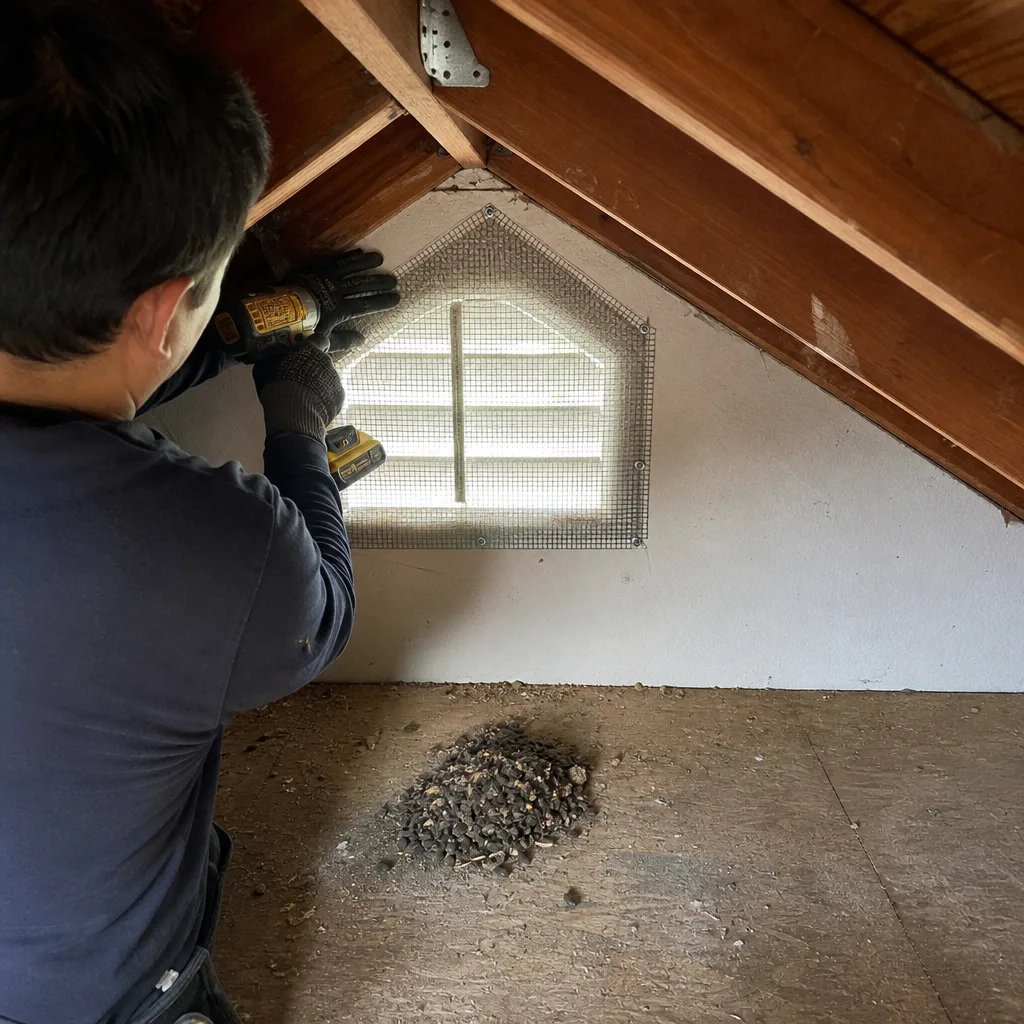
Here’s what you need to know before you spend a dime. Rockwool handles the conductive and convective heat (the “slow bake” heat), but it does next to nothing for radiant heat, which is the sun hammering your roof deck and turning your attic into an Easy-Bake Oven. The radiant barrier is the foil layer that reflects that heat back out. Without it, your Rockwool is doing half a job.
We’re Walt’s Insulation, locally owned and operated in San Jose since 2000. We’re an independent installer, not affiliated with Rockwool, but we work with their products every week and we stock the materials on our trucks.
Key Takeaways
- Radiant barrier over Rockwool typically costs $1.50-$3.50/sq ft installed in San Jose
- Most attics take one day; we carry the material on the truck
- Rockwool alone blocks roughly 25-30% of radiant heat; a properly installed barrier blocks 95%+
- We’re local, owner-operated, and answer our own phone at (408) 837-7384
Which Rockwool Models This Applies To
Radiant barrier doesn’t care which Rockwool product you have underneath it. Whether it’s Rockwool Comfortbatt, Safe’n’Sound, or Comfortboard, the barrier installs the same way: foil facing the roof deck with a minimum 3/4-inch air gap between the foil and the roof sheathing. That air gap is the part most people get wrong, and we’ll get into that.
What does matter is how your Rockwool is installed. If you have batts laid between ceiling joists (the most common setup in San Jose ranches built in the ’60s through ’80s), we install the radiant barrier on the underside of the rafters. If you have a conditioned attic with Rockwool against the roofline, that’s a different install entirely and you need to talk to someone who’s done both. We have.
One compatibility gotcha most homeowners never hear: radiant barrier over loose-fill or batt insulation must be perforated in San Jose’s climate. Solid foil traps moisture in winter when warm air from your living space rises into a cold attic. Perforated barrier lets that moisture escape. Big-box stores sell both kinds without explaining the difference, and we’ve torn out plenty of solid-foil installs that were sweating into Rockwool batts. The foil’s fine. The install wasn’t.
Signs Your Rockwool Radiant Barrier Installation Is Failing
- Attic temps spike to 130°F+ on a 90°F San Jose day. A functioning radiant barrier keeps an attic within about 10-15 degrees of outside air. If you’re hitting 130+, the foil has lost its reflectivity or was never installed with the right air gap.
- Visible dust coating on the foil face. Radiant barrier works by reflecting infrared heat from a clean, shiny surface. After 5-10 years of San Jose dust and the odd rodent, that surface gets dull. Dust cuts reflectivity by up to 40%.
- Foil tears, sagging, or staple pop-outs. Cheap installs use too few staples or the wrong staple. Sagging closes the air gap, and a barrier touching the roof deck conducts heat instead of reflecting it. It’s just expensive wallpaper at that point.
- Your upstairs rooms get noticeably hotter than downstairs starting around 3 p.m. That’s radiant heat saturating the attic and cooking through your ceiling. Rockwool delays it, but it doesn’t stop it without a barrier.
- Energy bills creep up year over year with no change in AC habits. San Jose’s cooling season runs May through October, and PG&E rates aren’t going anywhere but up. A dead radiant barrier means your AC works harder to fight an attic that’s 20 degrees hotter than it should be.
Replacement Cost & What’s Included
For a typical San Jose attic between 1,200 and 1,800 square feet, budget $1,800 to $4,200 installed. That includes the foil material (perforated, double-sided), staples, foil tape for seams, and our labor. We use double-sided foil when there’s already insulation on the attic floor; single-sided when there isn’t.
What drives the price is mostly attic geometry. A low-slope rancher in Willow Glen with easy access runs on the lower end. A steep pitch in Almaden Valley or an attic with a furnace, ductwork, and a dozen awkward corners runs higher. If your existing barrier is shredded or falling down, add removal time; our crew carries a $40-off-any-repair-over-$200 standing offer that softens that a bit.
Every radiant barrier we install is covered by the Done Right Promise. That means lifetime workmanship. If it sags, tears, or fails because we installed it wrong, we come back and fix it. No fine print, no runaround. That’s the whole point of hiring the one down the road instead of a national chain.
DIY or Call Us?
You can absolutely check a few things before calling anyone. Go up with a flashlight and look at your existing barrier. Is the foil face dirty? Are there gaps where sections are missing? Is it sagging between staples? Those observations tell you whether it’s a repair or a full replacement. A quick phone conversation with those notes gets you an honest estimate faster than a blind quote ever will.
Installing it yourself is a different conversation. Attics in San Jose hit 130°F+ in summer, and the work is staple-intensive, repetitive, and miserable in a Tyvek suit and respirator. You’re also working overhead for hours, and a missed staple means a section of foil drooping and losing effectiveness. We’ve redone enough DIY installs to know the pattern: the homeowner saved $1,500 and now pays us anyway, plus removal of the botched job. If you’re on the fence, call (408) 837-7384 and ask for a straight answer. You’ll get one, and the quote’s free.
FAQs
A properly installed perforated radiant barrier lasts 15-20 years in San Jose, though dust accumulation after year 10 starts shaving its effectiveness. Rockwool underneath it keeps performing regardless, but the barrier’s reflectivity is what degrades first. Call (408) 837-7384 and we’ll tell you honestly whether yours is dead or just dusty.
Small tears and popped staples can be repaired, and that’s usually a sub-$400 fix if the bulk of the foil is still shiny and taut. If the barrier is more than 30% dulled, torn, or sagging, replacement costs about the same or less than chasing individual failures for the next five years.
Most single-story San Jose homes take 4-7 hours, so we’re done in one day. Two-story homes or attics with ducts crowding every rafter bay can stretch to a day and a half. We call you when we’re 30 minutes out, and someone is on site the whole time. No “we’ll be there between 8 and 5.”
We do. We carry perforated double-sided foil, Reflectix for smaller bay sections where foil won’t lay cleanly, and the right staples and tape for the job. If your attic’s unusual dimensions need something we don’t have, it’s a 24-hour order and we’re back the next morning.
Written by Walt Brenner, Owner, Walt’s Insulation at Walt’s Insulation, serving San Jose and nearby areas.